Cloud Empress And The Beauty Of The Hex Crawl
Table top role playing games (ttrpgs) are pretty cool.
That's it, that's the pitch. The typically entry point for this hobby is Dungeons and Dragons (DnD) and many who've has played before know the unique feeling of being in a social space and taking part in collective storytelling. Playing these games scratches and itch, a desire for engaging with narrative on an analogue level, right?
Personally, I've seldom been the one to run a game. Over the course of more than a decade I've run a few DnD sessions here and there but in general I've engaged with ttrpg's as a player. Being a player is very different than being a game master (dungeon master, DM, GM, etc. these terms will be used interchangeably based on context throughout this blog). The way you engage with the game is much different, with your level of interaction being more so focused on immersion in the mechanics, as opposed to guiding those mechanics for the purpose of immersing others. Both modes of play count as well, play, but the experience of engaging with the systems is different depending on which side of the GM screen you are on.
It's only been in the last year or so that I've really put effort into changing that. First off with a DnD game running the Phandelver campaign. That game got about halfway through the full campaign but was... not great. Some of that can be attributed to DM growing pains, I'm still learning what makes a good DM/GM, but I also think part of it comes down to engagement with the setting and systems.
I found the amount of prep and the lack of flexibility in the DnD system to be very stifling. The source material was very hit or miss and the amount of work and prep I needed to do to make it work seemed like a lot of time investment. And, as a person who is in his early thirties, that time investment just makes the whole thing less and less appealing.
Obviously there are ways around that. I could do more custom work, adjustments, writing, inserting character motivations. With running a ttrpg, your get back what you put into it regardless of the game or system. But DnD in particular is very challenging, at least for me. There's a ton of rules bloat, extraneous systems, just too much going on. I found myself wanting things to be stripped back a bit.
After my Phandelver campaign sort of fizzled for irl reasons I decided it was time to dip my toe into another system. A friend of mine is very much in the ttrpg scene and we had been talking about playing an Old School Revival (OSR) game for a few years and now seemed like a great time to finally get it off the ground. That game was Cloud Empress from worlds by watt.
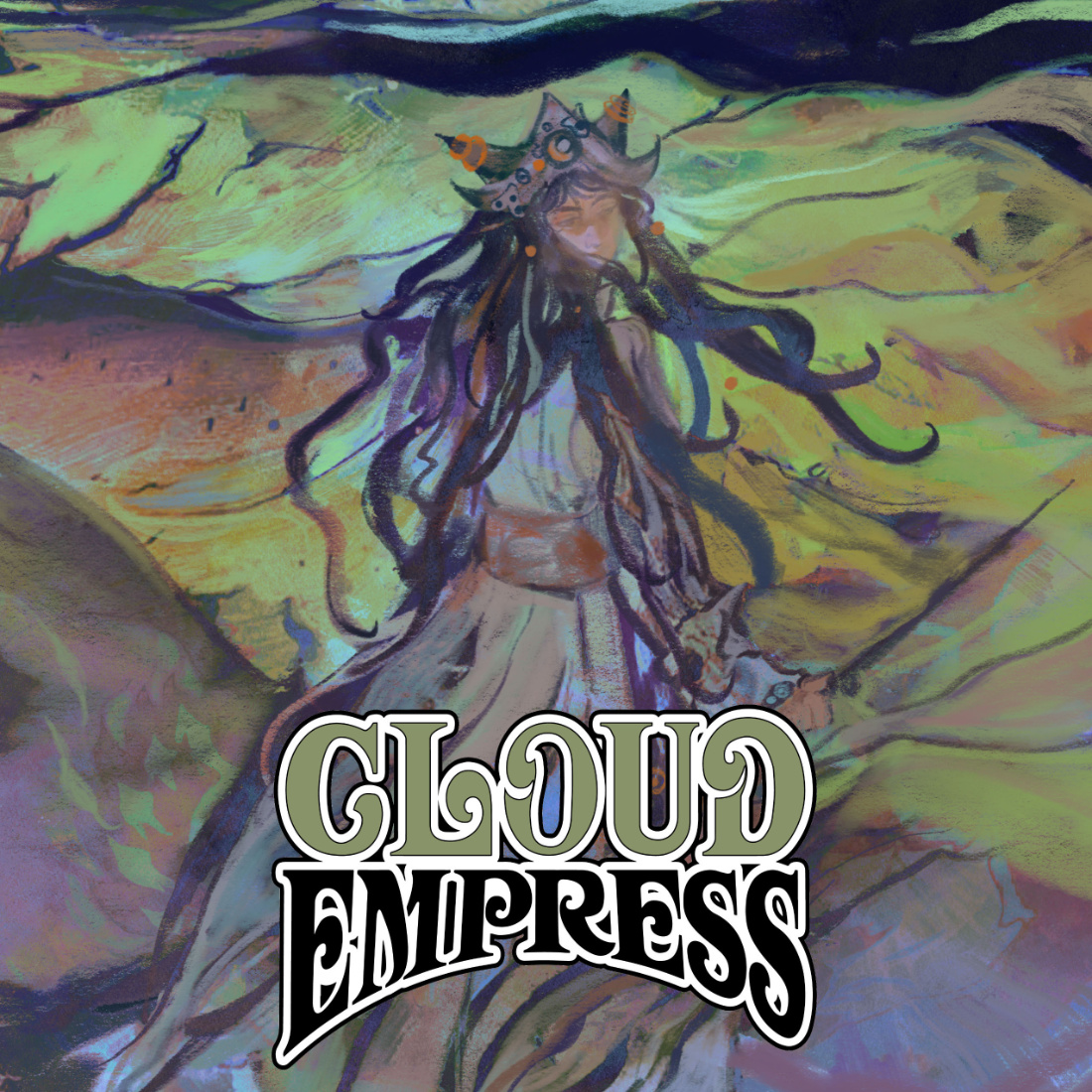
Cloud Empress is an Old School Revival game that started as a hack of the space horror game, Mothership. It takes place in a far future post apocalyptic setting that is heavily inspired by Hayao Miyazaki's Nausicaä of the Valley of the Wind.
In Cloud Empress, humanity destroyed the world. As you journey through the Hereafter and the Lowland Wastes you discover relics and ancient technology of a world that once was. It's not your typical post apocalypse though, as there is much beuty and nature still out there to discover, for good or for ill. As the rule book puts it: "Beauty was erased, and life was strip-mined to feed unstoppable addiction. Many things did not survive. Many others did."
In Cloud Empress, players take part in an open-world hex crawl where they encounter strange people, struggles for power, and god-like giant bugs. The game takes place in a dream-like world known as the Hereafter during the year of the Century Brood, a once in a hundred years event in which the Imago, giant psychic cicadas, decent on the lowland wastes. On top of this, the Empress has gone missing, and the players get caught up in the going-ons of the world.
Cloud Empress is not a game about power fantasy. It is lethal and difficult, and if players are not careful they can easily wander into a situation where they lose their lives. The game uses a unique systems called the PANIC engine based on Mothership. Instead of the classic DnD d20 system, PANIC is a d100 system similar to games like Call of Cthulhu or Warhammer Fantasy. What makes the system unique is it's a health system that gamifies the player character's stress. As players engage in difficult situations they build up stress up to a maximum of 10 points. When they hit that threshold their characters panic, causing various effects that more often than not make the situation worse. There's a bit more nuance to it, but essentially the system drives home the main mechanical point and personality of the system: that the characters are not heroes, they are just regular people trying to get by in a beautiful but cruel world.
The game rips, and being a hex crawl, it solves a lot of problems I had with GMing DnD.
A major selling point for me was that there is minimal prep involved. Hex crawls by nature are a lot simpler to run than a typical game of 5th edition DnD (5e). The GM has access to various tables and rolls for events and effects depending on what is happening. This results in unexpected situations and a lot of interpretation based on what you roll.
Will the players get lost? What kind of weather are we dealing with? Are NPCs hostile or friendly? What does the strange trader have in their pack to barter with? Many questions and many tables exists to answer these questions and more.
With an OSR hex crawl, things are much more open to interpretation that in other types of games. I find myself prompting the players and asking how they want to interact with the world and we collectively work through how their characters would handle a given situation. Collaboratively, myself and my players are discovering the secrets of the world to build a rich setting.
A fun consequence of this play style is I have got to watch several of my players who previously were only familiar with 5e learn how to play a game outside the walls of those systems. They're learning how to play a story game that is much more malleable but also much more dangerous. It's been exciting watching them push on the edges of what is possible and I've enjoyed getting to be a part of that development. There are many different kinds of players, and it's interesting presenting people with new tools and seeing how they interact with them when they don't have the shadow of 5e hanging above their heads.
When playing a ttrpg, it's often difficult to get players to think outside the box. The main thing is convincing players that they can act outside of what it says on the character sheet. The sheet can be a useful tool for new players as it set parameters for what engagement in the game looks like, but it can also be a crutch for many players if they become too reliant on it. The sheet is a suggestion as to what can happen, it does not encapsulate the whole play experience, and when playing with people of different experience levels, navigating that line can be the main challenge in getting people to really engage with your game.
When it comes to GMing a session of Cloud Empress, the books are filled with beautiful prompts that are open to interpretation. The materials are much more concerned with setting the mood than telling the GM exactly how things are going to go, how NPCs act, how events transpire. We're not wandering into monster closets, we're wandering into living, breathing world. As a GM there's some work involved in setting up the pieces and rolling with the players choices, but the hex crawl is much more free form than other games, like the difference between jazz and classical music.
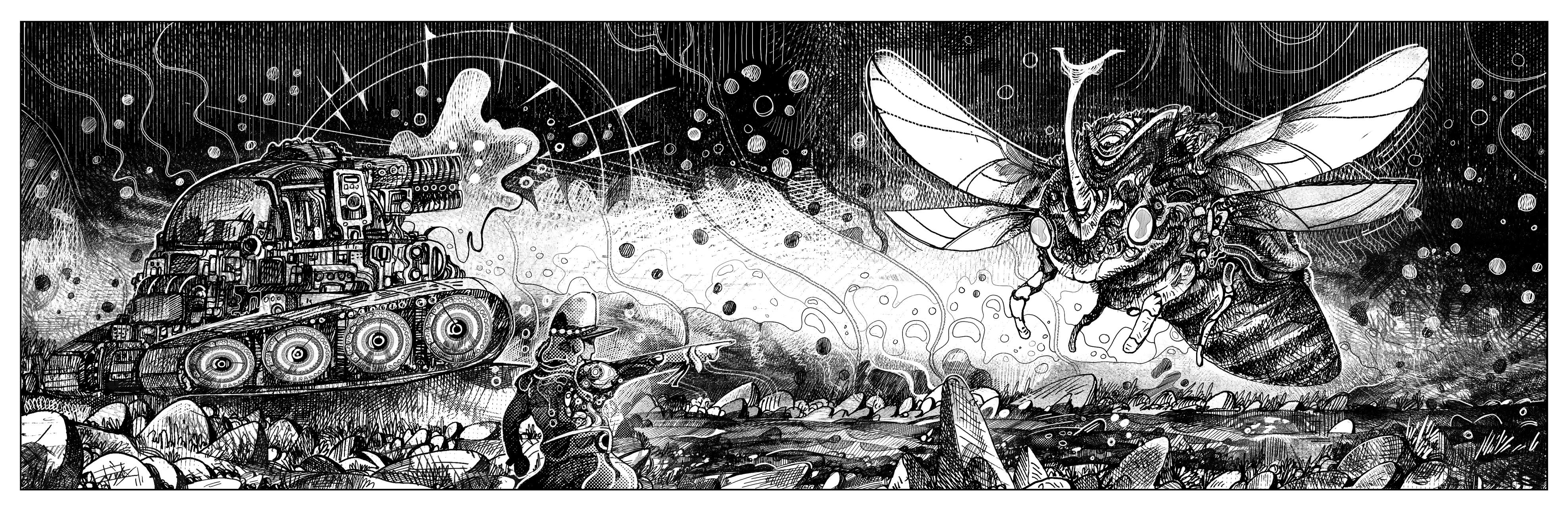
When is comes to general sentiment in the ttrpg space, I think people may have written off Cloud Empress of when they saw a list of it's inspirations. They see "Ghibli-inspired" and conjure up images of cozy gaming. Not that there is anything wrong with a cozy game but it would definitely be inaccurate to classify Cloud Empress as one. This is a bit anecdotal, but it's not a game that I've seen a lot of discussion about online, which seems like a shame to me when it brings. a lot of interesting ideas to the table.
Cloud Empress' setting is brutal and difficult. Every dungeon seems to come with various content warnings around death, suicide, bugs, violence, and so on. The stories found in the Hereafter deal with real issues and are not for the faint of heart. In our short time playing, my players have found themselves in difficult emotional environments. These range from trench warfare, to siblings killing each other, to lost people poisoning the world around them both literally and figuratively.
But there is levity and beauty to counteract the darker themes. It gives and takes in equal measure. The lessons learned in asession of Cloud Empress are to tread lightly, tread carefully, but don't be afraid to put yourself out there becasue a friendly stranger may be there to help carry the burden.
Cloud Empress has awoken in me a love for the hex crawl and a greater appreciation for running ttrpgs. It has brought out the GM in me, to the point where I am no longer the type of person who will only play and game and never run one. It has shown me how invested I can become in the characters my friends and players create. In how much I care for their journeys, for their wins and their losses. Every two weeks, as I prepare to sit down at my table, I find myself excited for the session ahead every time.
Cloud Empress is a prefect fit for me. As you can probably tell, I recommend people play it to discover it for themselves. But I also recommend just broadening your horizons in general to find your perfect game. Play new games, play weird games, and if you've never tried before, give running a game a try. You may enjoy it more than you think.
See you in the Hereafter.